Equipment Capex vs Electricity Opex Over a 3-Year Run
Unlike packaging machinery that draws only 3–5 kW, thermal dryers move hundreds of kilowatts-hours of latent heat every week—meaning a cheaper uninsulated resistance oven often costs more within 10 months of electricity bills than a closed-loop heat-pump or steam-coil system. Grounded in dehydrator sizing and selection and dehydration airflow and process specs, evaluate purchase price alongside kWh per kg of water removed.
Use the tiers below to budget standalone dryers as well as spare trolleys, slicing prep, and barrier pouchers.
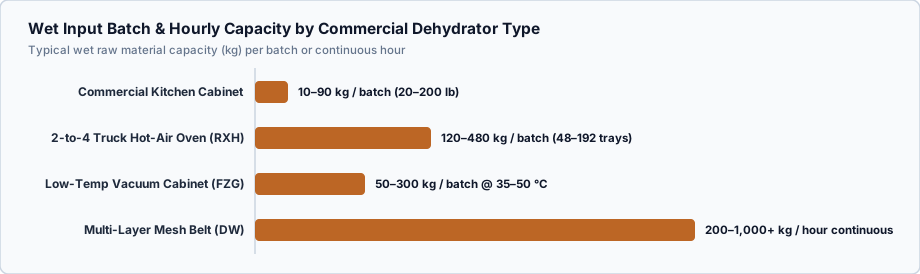
Published Commercial Food Dehydrator Budget Tiers
Typical FOB factory budget ranges by dryer platform and batch/hourly capacity:
| Dryer Tier | Wet Capacity Range | Typical Budget Range (USD) | Core Included Hardware |
|---|---|---|---|
| Reach-In Stainless Cabinet (24–48 Trays) | 30–110 kg / batch | $1,800 – $5,800 | SUS304 body/trays, PID recipes, 220V/380V |
| Walk-In RXH Truck Oven (1–4 Trucks) | 120–560 kg / batch | $6,500 – $24,000 | Mobile trolleys, 48–192 trays, electric or steam |
| Closed-Loop Heat-Pump Room/Cabinet | 150–800 kg / batch | $9,500 – $34,000 | 3–12 HP heat-pump unit, insulated chamber, trolleys |
| FZG Low-Temp Vacuum Shelf Cabinet | 50–300 kg / batch | $14,000 – $45,000 | Vacuum vessel, hollow heated shelves, vacuum pump |
| DW Continuous Multi-Layer Mesh Belt | 200–1,500 kg / hour | $38,000 – $145,000+ | 3–5 SUS304 mesh passes, feeder, multi-zone fans |
Walk through the full selection checklist in how to choose a commercial food dehydrator.
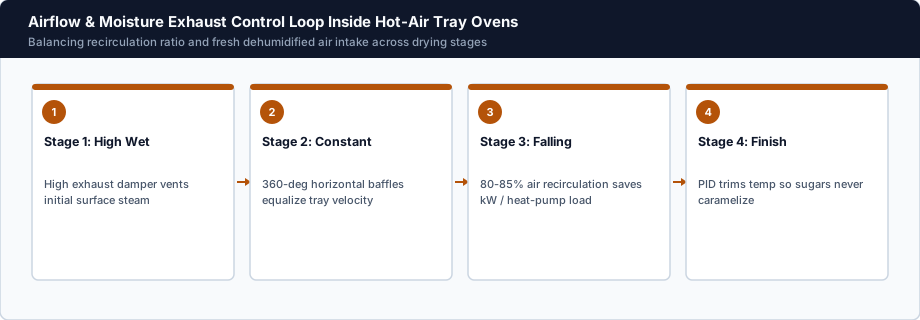
Commercial Dehydration Engineering Notes
- Budget Spare Trolleys & PTFE Liners: Adding 1 extra set of stainless trolleys and trays (~$900–$1,800 per truck) boosts daily oven utilization by 20–30% by eliminating reload downtime.
- Heat-Pump Payback Under 12 Months: At $0.14/kWh running 2 batches/day on 250 kg wet fruit, a heat-pump unit saves ~$11,000/year in electricity over open resistance heating.
- Factor Wet-Prep & Barrier Packaging: Budget rotary slicers, spin-dryers, and an anti-stick weigher/poucher if building a greenfield snack plant.
Request an Itemized Dryer + Trolley Quote
Send your product, wet batch weight, and plant utilities via Project Brief.
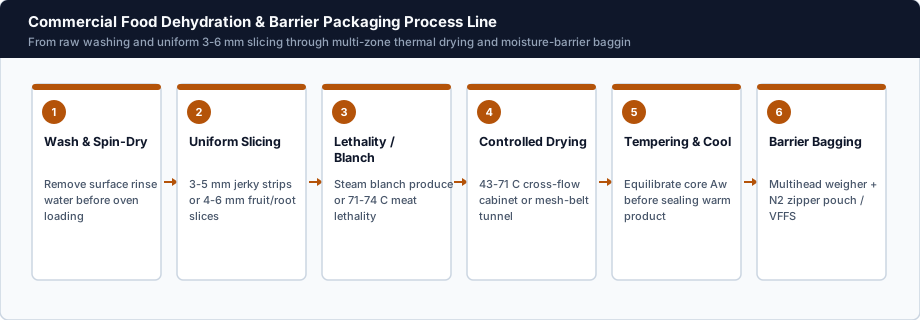
Explore related equipment in Commercial Food Dehydrators, Airflow & Process Specs, or send your wet-to-dry batch targets via Project Brief.
Related Specifications
Further Reference
Request Project Configuration Review
Share layout constraints, architectural drawings, or throughput targets with Commercial Food Dehydrator Technical Group.
Size My Dehydrator