Product-Specific Prep, Lethality, and Drying Curves
A raw apple ring (85% water, high fructose) and a marinated beef eye-of-round strip (72% water, myofibrillar protein + pathogen risk) require completely different pre-treatments, tray surfaces, and temperature schedules. Grounded in dehydration airflow and process specs, these application blueprints pair thermal food safety with premium texture.
Dive into produce and botanical curves in fruit, vegetable, and herb dehydrators and USDA lethality compliance in jerky, meat, and pet treat dehydrators.
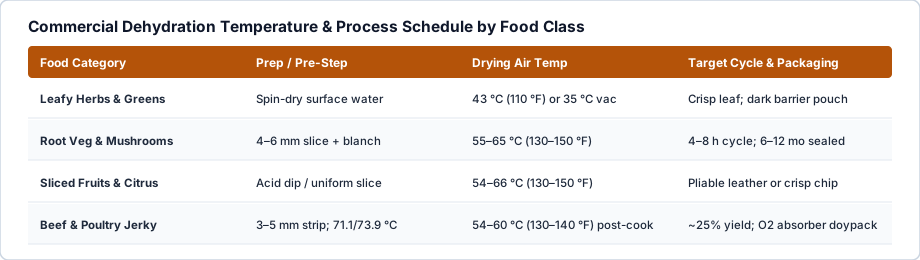
Raw-to-Dry Yield & Target Moisture Reference by Product
Typical commercial conversion yields and target finished metrics:
| Raw Material | Slice / Prep Spec | Wet-to-Dry Yield Ratio | Finished Moisture / Aw Target |
|---|---|---|---|
| Sliced Apples & Mangoes | 4–6 mm rings/cheeks + citric dip | ~6:1 to 7:1 (14–17% yield) | 12–18% moisture; <0.62 Aw |
| Carrots, Onions & Soup Veg | 4–5 mm dice/slice + steam blanch | ~8:1 to 10:1 (10–12% yield) | 5–8% moisture; <0.55 Aw |
| Culinary Herbs (Mint, Basil) | Spin-dried whole leaves on fine mesh | ~7:1 to 9:1 | 6–9% moisture; 43 °C green retention |
| Beef Jerky & Meat Strips | 3–5 mm slice; 71.1 °C wet heat first | ~4:1 (~25% yield; 4 oz / lb) | <=0.80–0.85 Aw; <=0.75:1 MPR |
Plan downstream weighing and nitrogen-flush pouches on dehydration and packaging lines.
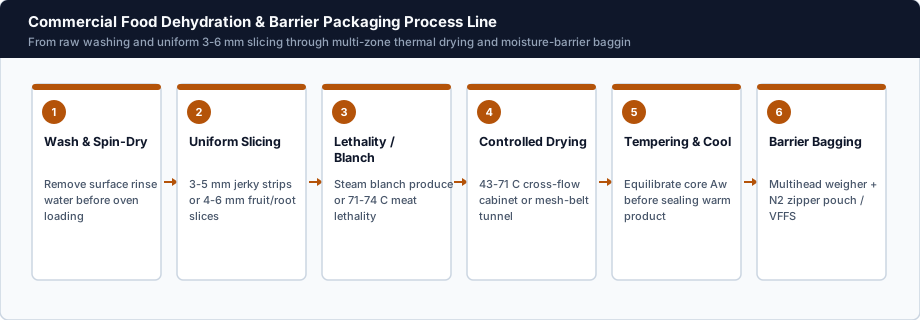
Commercial Dehydration Engineering Notes
- Centrifugal Spin-Drying Before Loading: Removing free wash water from leafy greens and diced vegetables in a 60-second spin dryer cuts first-hour dehydrator kWh load by 15–20%.
- PTFE Non-Stick Liner Sheets: Sticky fruit purees, glazed salmon jerky, and sweet marinades lift cleanly off food-grade PTFE mesh overlays without tearing.
- Steam Blanching Preserves Color: A 90–120 second steam blanch inactivates polyphenol oxidase enzymes in carrots and potatoes so dried dices stay vibrant for 12 months.
Qualify Your Recipe Yield
Send your raw ingredient list and target daily finished kg via Project Brief.
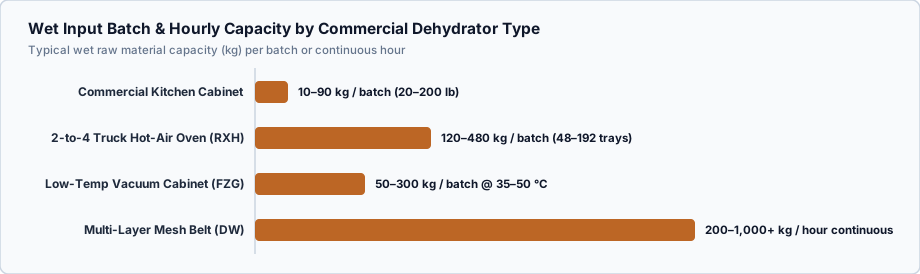
Explore related equipment in Commercial Food Dehydrators, Airflow & Process Specs, or send your wet-to-dry batch targets via Project Brief.
In This Section
Related Specifications
Further Reference
Request Project Configuration Review
Share layout constraints, architectural drawings, or throughput targets with Commercial Food Dehydrator Technical Group.
Size My Dehydrator