Protecting Crispness and 12-Month Shelf Life After the Dryer
Dehydrated fruit chips, soup greens, and beef jerky are intensely hygroscopic the moment they exit a commercial food dehydrator—leave dried kale or apple crisps exposed to 65% ambient factory humidity for 40 minutes and they turn chewy before reaching the scale. Integrating low-humidity cooling, anti-stick multihead weighing, oxygen-absorber dispensing, and high-barrier pouch sealing locks in texture and 6–12 month ambient shelf life.
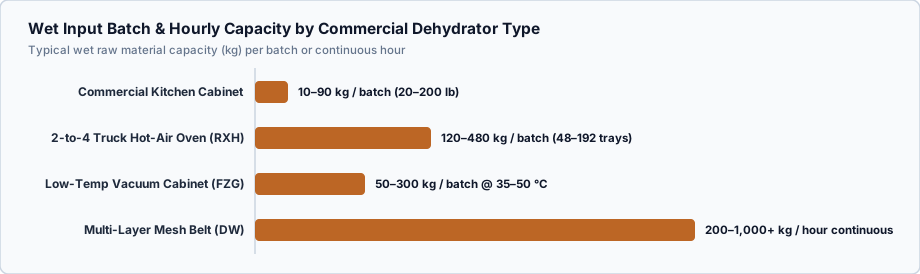
We configure complete wet-prep-to-packaged-pouch lines sized from 50 kg/h batch snack kitchens up to 1,000 kg/h continuous mesh-belt plants.
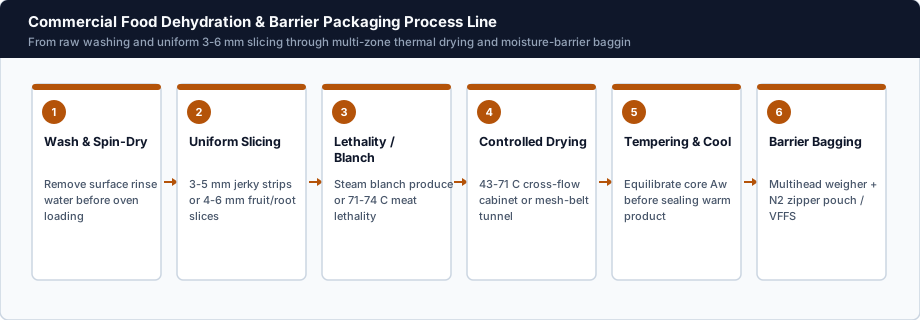
End-to-End Dehydrated Food Line Module Architecture
Coordinated upstream preparation, thermal drying, and primary barrier packaging:
| Line Section | Core Equipment Modules | Critical Engineering Spec |
|---|---|---|
| 1. Wet Prep & Slicing | Bubble washer, centrifugal spin dryer, rotary slicer | ±0.3 mm slice uniformity ensures even drying |
| 2. Thermal Dehydration | 2–4 Truck RXH Heat-Pump Oven or DW Mesh-Belt Tunnel | Staged PID temp + humidity exhaust control |
| 3. Equilibration & Inspection | Filtered cooling belt + inline metal detector | Cool <28 °C; screen ferrous/SS/non-ferrous |
| 4. Weighing & Barrier Packing | 14-Head Dimple Weigher + 8-Station Zipper Pouch / 520 VFFS | 300 g–3 kg stand-up doypack + N2 flush / O2 packet |
Review manufacturing & FAT standards on commercial food dehydrator manufacturer.
Commercial Dehydration Engineering Notes
- Anti-Breakage & Anti-Stick Weighing: Brittle vegetable flakes use cushioned low-drop chutes, whereas glazed jerky strips use steep 60° embossed dimple buckets.
- Oxygen Absorber + Nitrogen Flush: Combining automated O2-scavenger sachet dropping with nitrogen gas flushing keeps residual oxygen <1% to prevent lipid rancidity in jerky and pet chews.
- Clog-Resistant Zipper Pouches: Powdered dehydrated soup bases and cocoa/fruit blends pair auger fillers with hook-to-hook or shielded press-to-close doypacks.
Request a Complete Floor Layout
Send your raw product, hourly target, and retail pouch sizes via our Project Brief.
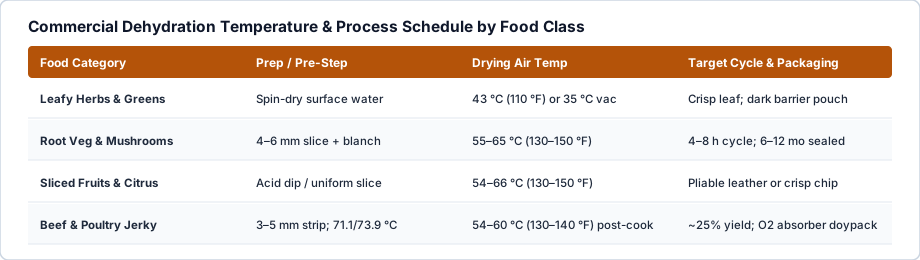
Explore related equipment in Commercial Food Dehydrators, Airflow & Process Specs, or send your wet-to-dry batch targets via Project Brief.
Further Reference
Request Project Configuration Review
Share layout constraints, architectural drawings, or throughput targets with Commercial Food Dehydrator Technical Group.
Size My Dehydrator